
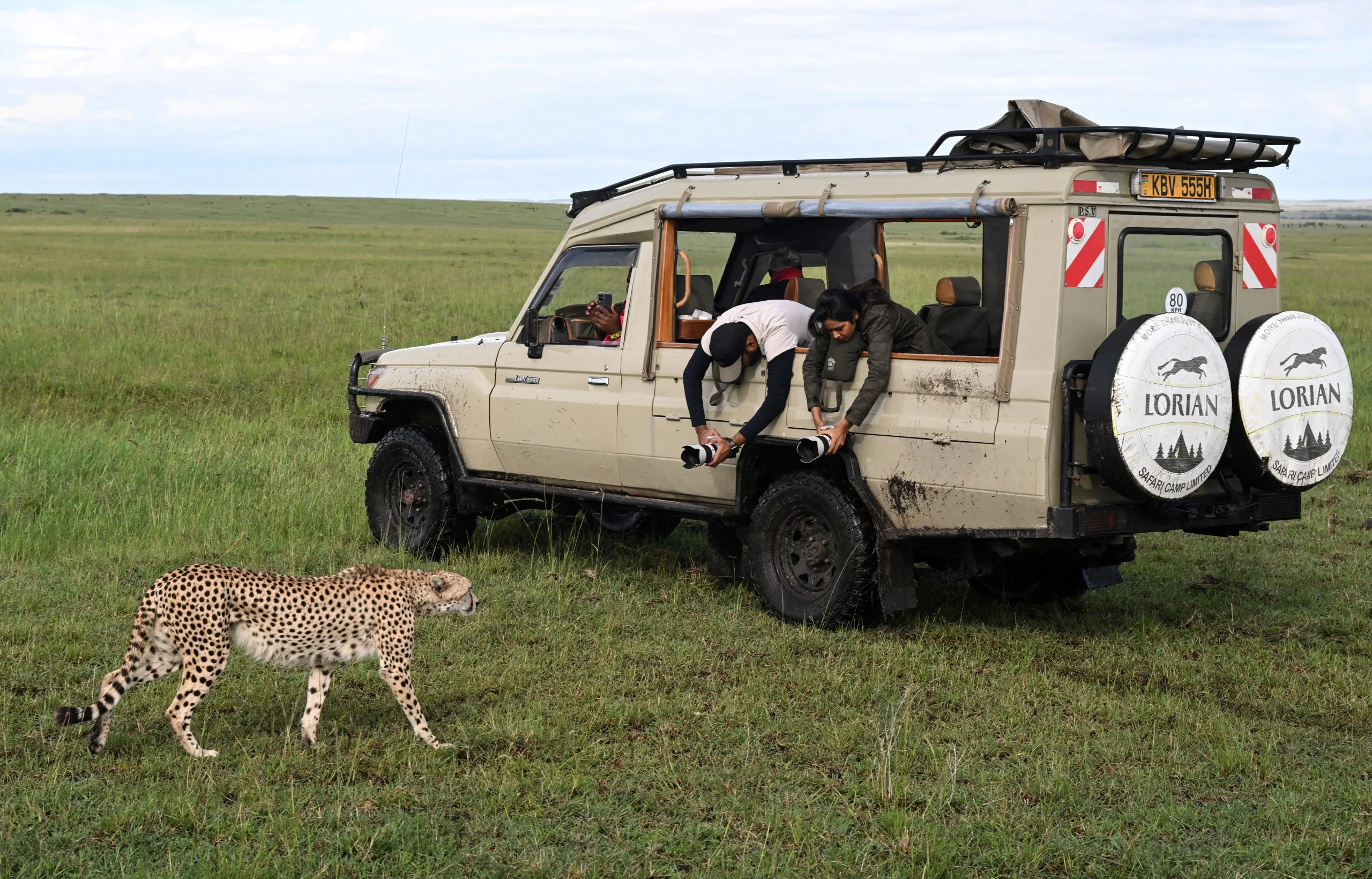
Kenya's tourism industry continues to play an important role in economic development, supporting employment, foreign exchange earnings, and conservation. However, recent reporting on tourism pressures in the Maasai Mara highlights a growing challenge: how can Kenya expand tourism while protecting the ecosystems that sustain it?
According to the World Travel & Tourism Council's 2026 Economic Impact Research, Kenya's travel and tourism sector contributed US$12.7 billion, equivalent to 9.3% of GDP, in 2025, while supporting approximately 1.8 million jobs. These figures demonstrate the sector's economic importance, but they also underline the need for responsible development that balances economic opportunity with environmental protection.
The Maasai Mara, one of Kenya's most significant wildlife destinations, depends on healthy ecosystems, biodiversity, and the movement of wildlife across protected and community-managed areas. A report published by The Times on September 14 highlighted concerns about tourism expansion, habitat degradation, and development pressures in the region. The report also described disagreements surrounding new accommodation developments and environmental oversight.
These concerns raise broader questions about land-use planning, the management of tourism facilities, and the long-term sustainability of conservation areas. Without appropriate planning and monitoring, poorly managed development can place pressure on natural habitats, increase waste generation, and affect the communities whose livelihoods depend on tourism and natural resources.
Sustainable tourism requires more than increasing visitor numbers. It calls for investment in low-impact infrastructure, effective environmental monitoring, responsible waste management, and meaningful participation by communities living alongside protected ecosystems. Local communities should have opportunities to benefit from tourism through employment, entrepreneurship, conservation partnerships, and fair participation in decisions affecting their resources.
Technology can support this transition through wildlife monitoring, geographic information systems, digital visitor-management tools, and data-informed conservation planning. These approaches can help identify environmental pressures, support better land-use decisions, and improve coordination between conservation organisations, local authorities, and tourism operators. However, technology is most effective when combined with strong governance, reliable data, and community involvement.
Kenya can also strengthen sustainable tourism by encouraging innovation among young people and local enterprises. Opportunities in eco-tourism, environmental data collection, renewable energy, sustainable construction, and digital tourism services can create new livelihoods while supporting conservation objectives.
For Kenya, the future of tourism depends on connecting economic growth with environmental responsibility. Innovation, reliable data, effective environmental oversight, and community-led conservation can help strengthen the relationship between tourism development and ecosystem protection. By adopting a more sustainable approach, Kenya can work towards ensuring that its natural heritage continues to support both present and future generations.