
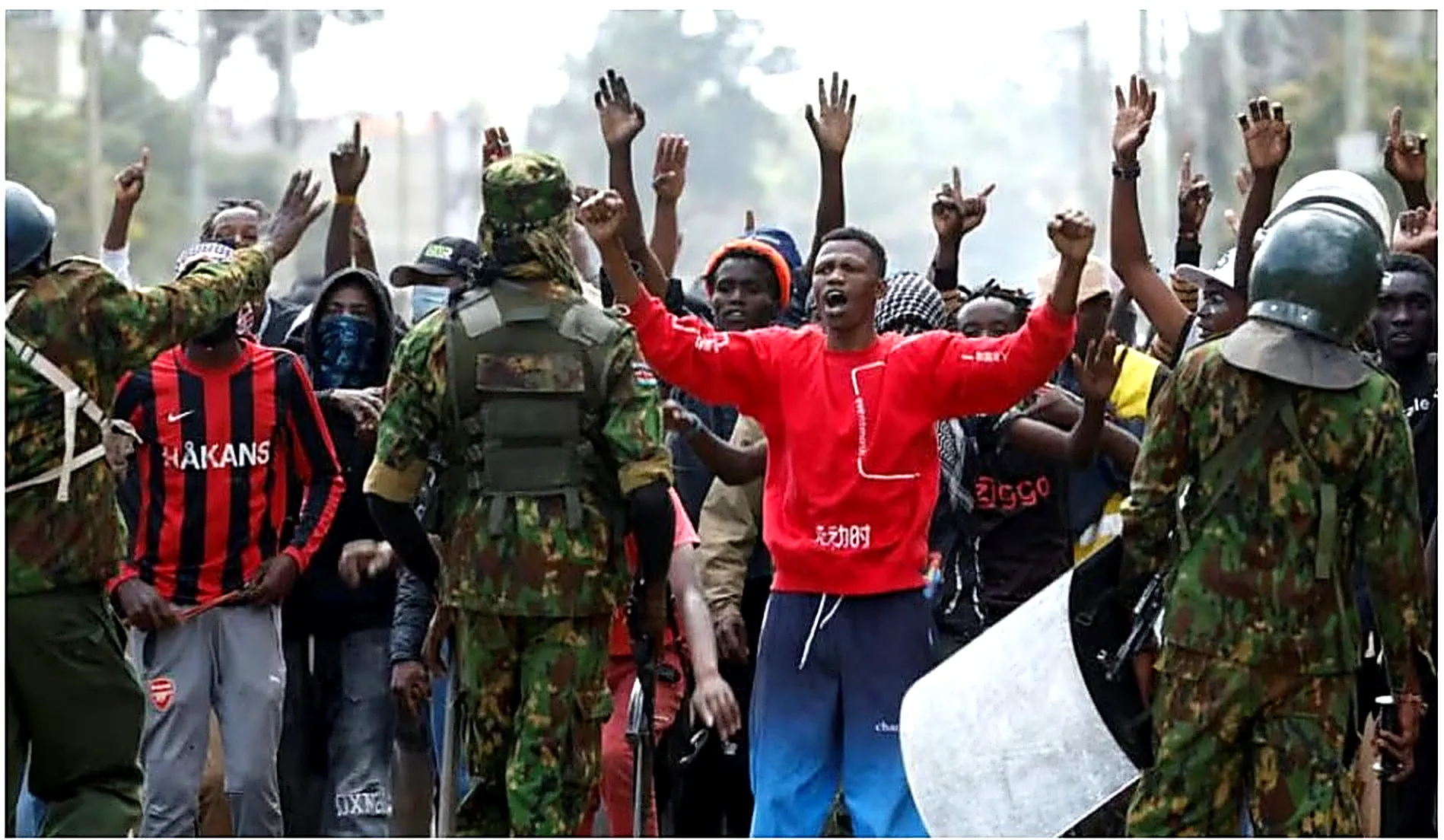
The usually calm town of Nanyuki has become the center of a heated national debate.
For weeks, residents of Laikipia have taken to the streets to protest a proposed U.S.-backed Ebola quarantine facility being established at Laikipia Air Base. The facility, designed to accommodate American citizens exposed to Ebola during the ongoing outbreak in the Democratic Republic of Congo (DRC) and neighboring Uganda, has sparked widespread concern among local communities.
The controversy began when news emerged that a 50-bed quarantine facility would be constructed at the military base to receive Americans potentially exposed to the virus. While both the Kenyan and U.S. governments have maintained that the facility is intended as a precautionary public health measure, many residents saw the decision differently.
For many protesters, the issue is not only about Ebola. It is about trust, transparency, and whether communities have a right to be consulted before decisions that could affect their health, safety, and livelihoods are made.
"We are not against helping people," became a common sentiment among demonstrators. "We are against decisions being made without involving us."
As concerns spread across Laikipia, hundreds of residents, youth groups, civil society activists, and local leaders organized demonstrations demanding the suspension of the project. Protesters questioned why individuals exposed to Ebola could not be quarantined within the United States or closer to the outbreak zones in the DRC and Uganda. Others feared that hosting such a facility could expose Kenya to unnecessary health risks despite assurances from authorities.
The protests quickly escalated.
Police responded with tear gas and arrests as demonstrators gathered near the airbase. Human rights organizations reported that several protesters were detained during the demonstrations. The unrest turned deadly when at least one protester was killed during clashes with security officers, further fueling public anger and drawing national attention to the issue.
At the same time, legal challenges were filed in court. Petitioners argued that the project had proceeded without adequate public participation and sought greater disclosure regarding the agreement between Kenya and the United States. In response, the High Court temporarily suspended aspects of the project and ordered further review while hearings continue.
Despite the court orders and growing opposition, construction activities and preparations at the site have remained a source of concern for residents, who argue that authorities have not sufficiently addressed their questions.
President William Ruto has defended the project, describing it as a responsible humanitarian response and part of Kenya's longstanding partnership with the United States. Government officials have repeatedly emphasized that the facility is intended for quarantine and observation rather than treatment of active Ebola cases.
However, on the streets of Nanyuki, the debate continues.
For many residents, the protests have evolved into a broader conversation about accountability, citizen participation, and the right of communities to have a voice in decisions that directly affect them. Whether one supports or opposes the facility, the events in Laikipia have highlighted the importance of transparent governance and meaningful public engagement in matters of public health and national policy.
As court proceedings continue and questions remain unanswered, residents are still waiting to see whether their concerns will influence the final outcome of one of Kenya's most contentious public health controversies in recent years.