
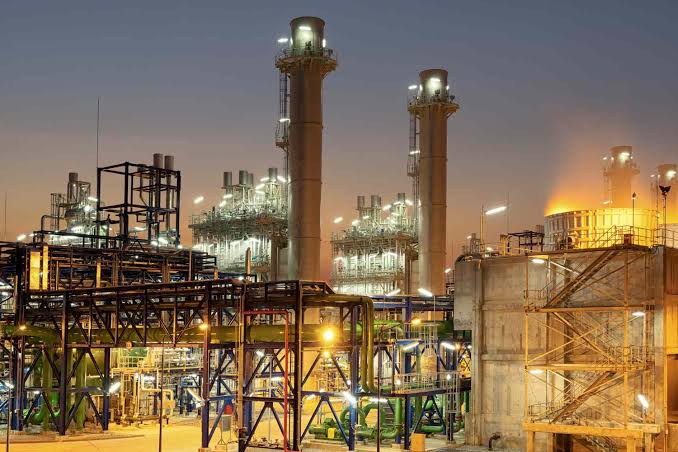
Kenya is done aiming for "middle income." In his State of the Nation address on July 30, President William Ruto acknowledged that Vision 2030's goal of upper-middle-income status by 2030 is off target, and unveiled Vision 2060 later also referenced as reaching toward 2063 a new development charter aiming to make Kenya a prosperous, high-income, industrialised, and globally competitive nation within a generation. Nationwide public consultations begin August 12, bringing in the private sector, academia, civil society, workers, innovators, and young people to help shape the plan.
President William Ruto didn't soften the diagnosis. He pointed out that Kenya and South Korea had almost identical GDP per capita about $110 back in 1965. Sixty years later, South Korea's stands above $36,000; Kenya's sits at roughly $2,400. That gap is the entire argument for Vision 2060: countries that industrialised deliberately and consistently South Korea, China, Vietnam, Bangladesh pulled away, while Kenya repeatedly missed the wave. The new blueprint leans on three shifts to try to close that gap: moving agriculture from subsistence farming to high-yield, technology-driven, agro-processing systems that export finished goods instead of raw materials; building manufacturing hubs designed to serve regional markets under the African Continental Free Trade Area; and pairing stronger infrastructure with digital upgrades across the economy.
Not everyone is convinced the timing is right. Former Deputy President Rigathi Gachagua argued the government should tackle the rising cost of living and growing public debt before promoting a plan stretching to 2060, and former Chief Justice David Maraga raised similar concerns. It's a fair tension: a 35-year vision is only as credible as a country's ability to deliver on the next five. That's exactly where the real work of Vision 2060 will actually happen not in the blueprint itself, but in whether Kenya builds the human capital, technical skills, and innovation capacity to carry it out.
This is the gap Science Horizons Kenya exists to close. Vision 2060's industrialisation and agro-processing ambitions depend on exactly the kind of environmentally and economically sustainable technology Science Horizons Kenya champions the difference between manufacturing that just moves fast and manufacturing Kenya can actually sustain. Its youth empowerment work, mentorship, training, and support to help young people build careers and access job opportunities is the direct answer to a blueprint that talks about industrial and digital transformation but will only succeed if Kenya's youth are equipped to build and run it, not watch it happen. And its commitment to data-driven impact grounding every intervention in rigorous analysis is precisely the discipline a 35-year national plan needs if it's going to avoid becoming another Vision 2030: ambitious on paper, off-target in practice.
Vision 2060 is a bet that Kenya can still catch an industrialisation wave it has missed twice before. Whether that bet pays off won't be decided in State House speeches or consultation forums; it will be decided by whether ordinary young Kenyans have the skills, opportunities, and dignity to build the "first-world nation" the government is promising. That is the work Science Horizons Kenya is already doing, one young person, one community, and one data point at a time and it's the work Vision 2060 will need if it hopes to succeed where Vision 2030 fell short.